
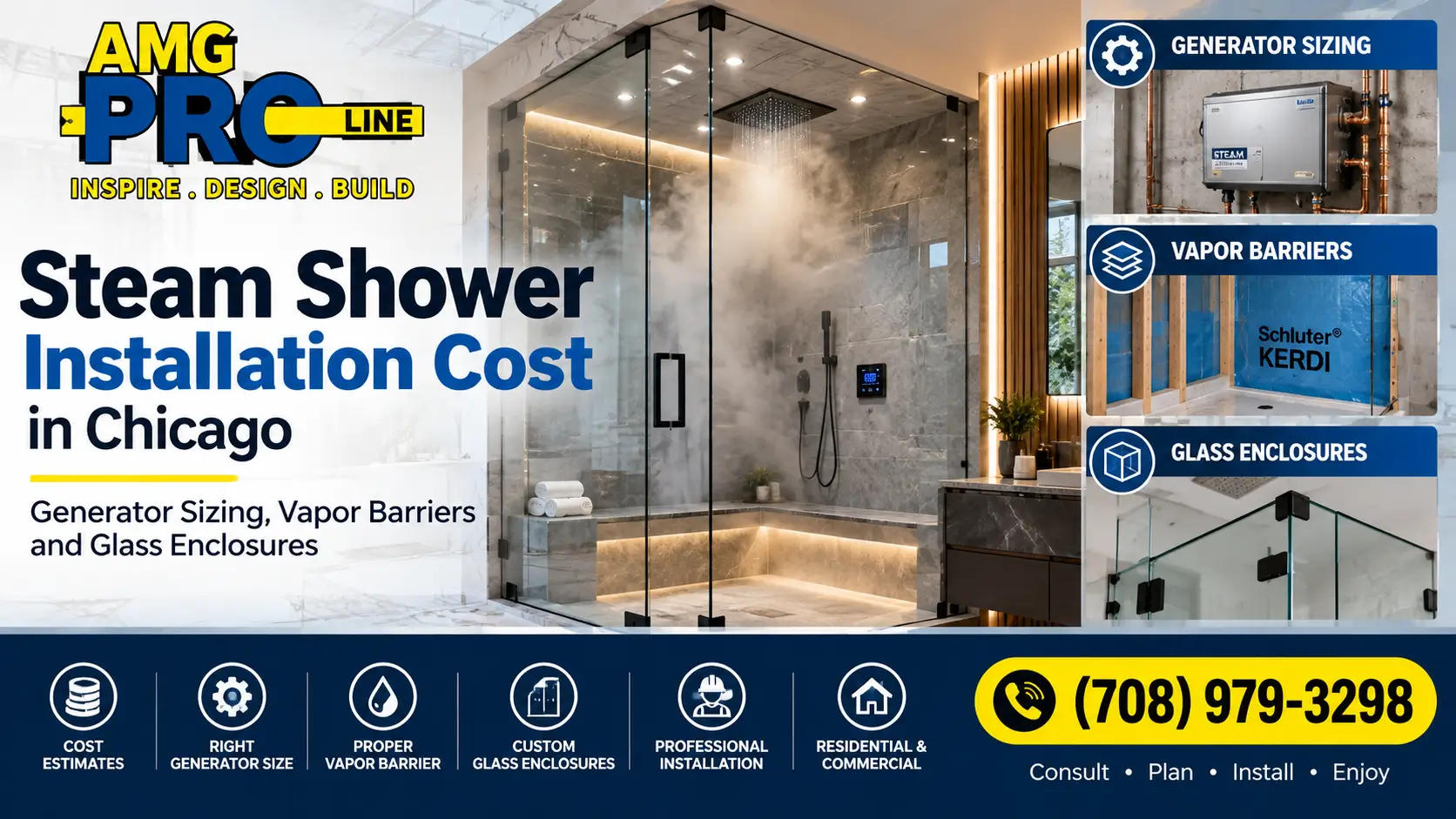
Quick answer: Steam shower installation cost in Chicago usually runs about $15,000 to $30,000 to rebuild an existing shower as a steam shower, and $28,000 to $55,000 or more for a custom primary-suite steam shower with stone tile and frameless glass. The generator itself is only a small part of the price. Most of the money goes into what makes steam safe: a correctly sized generator, a vapor-proof membrane on every wall and a sloped ceiling, a sealed full-height glass enclosure, and a dedicated 240-volt circuit. AMG Proline gives a fixed written price after a free in-home visit. Call (708) 979-3298 or request a free estimate!
Licensed and bonded in Illinois (License #104.020448) · Remodeling since 2000 · BBB A+ rated · In-house trades · Read our Google reviews here!
A steam shower turns an ordinary shower into a private steam room, and it is one of the most requested upgrades in Chicago primary bathrooms. It is also the shower type that punishes shortcuts the fastest. Steam reaches every seam, every screw hole and every gap in the waterproofing, and in a Chicago winter it will find the coldest wall in the house. This guide explains what a steam shower really costs, what the money pays for, and how to tell a quote that will last from one that will not.
This guide goes with our walk-in shower installation service. To see how we price every project, read Why We Quote Fixed Written Prices When Most Contractors Won’t.
Thinking about a steam shower? We check your wall framing, electrical panel and ceiling height before we price anything. Call (708) 979-3298!
Steam Shower Installation Cost in Chicago by Project Type
These are planning ranges based on the steam showers we build across Chicago and the suburbs. Your fixed price depends on the size of the enclosure, the tile you choose and what we find once the old shower is opened up.
| Project type | What’s included | Typical timeline | Planning range |
|---|---|---|---|
| Steam rebuild of an existing shower | Demo to studs, vapor-proof membrane, sloped ceiling, generator, 240V circuit, porcelain tile, steam-rated glass | 2 to 3 weeks | $15,000 to $30,000 |
| Custom primary-suite steam shower | Larger enclosure, built-in bench, niches, stone or large-format tile, frameless glass with transom, upgraded controls | 3 to 5 weeks | $28,000 to $55,000 |
| Spa-level steam shower | Natural stone throughout, multiple shower heads, body sprays, aromatherapy, lighting, digital controls inside and outside | 4 to 7 weeks | $55,000 to $90,000+ |
| Steam shower as part of a full bath remodel | The steam shower plus vanity, flooring, lighting, ventilation and layout changes | 5 to 9 weeks | Priced as one project |
Price per square foot is a poor way to compare steam shower quotes. Two showers the same size can need very different generators, electrical work and glass. A complete written price that lists every line item is the only fair comparison. For full bathroom pricing, see What a Bathroom Remodel Costs in Chicago.
Where the Money Goes
| Line item | What drives the cost | Typical range |
|---|---|---|
| Steam generator | Size in kilowatts, brand, auto-flush and auto-drain features, quick-start models | $1,800 to $5,500 |
| Electrical | New dedicated 240V circuit, wire run length, conduit, and whether the panel has room | $900 to $3,500 (panel upgrade extra) |
| Vapor-proof membrane and sloped ceiling | Membrane system, framing the ceiling slope, insulating exterior walls | $2,500 to $6,000 |
| Tile and stone | Material, enclosure size, bench and niches, heated floor | $6,000 to $20,000+ |
| Steam-rated glass enclosure | Full-height panels or a transom, glass thickness, seals, hardware finish | $4,000 to $9,500 |
| Plumbing | Water supply to the generator, steam line, drain line, valve and shower heads | $2,000 to $5,000 |
| Controls and extras | Inside and outside controls, aromatherapy, chromotherapy lighting, sound | $800 to $4,000 |
| Permits and inspections | Set by your city or village, mainly for electrical and plumbing work | Varies by town |
We handle demolition, waterproofing, tile and finish work with our own crews. See In-House Trades vs. Subcontractors for why that matters to your price and schedule.
Generator Sizing: Room Volume, Tile Type and Exterior Walls
The generator is the heart of a steam shower, and the most common mistake is buying one that is too small. An undersized generator runs nonstop and never fills the room with steam. An oversized one costs more than it should and can need a bigger electrical circuit than your panel can give.
Step 1: Measure the room volume
Sizing starts with the enclosure’s volume in cubic feet: length times width times ceiling height. A 5 by 4 foot shower with an 8 foot ceiling is 160 cubic feet. This is one reason we keep steam shower ceilings low, usually no higher than about 8 feet. Every extra foot of height adds volume the generator has to heat, and steam rises away from you.
Step 2: Adjust for the tile and walls
Generator makers publish adjustment factors because materials absorb heat at very different rates. Ceramic tile is the baseline. Thick porcelain, marble, granite and other natural stone soak up much more heat before the room warms, so they raise the required capacity, often by a quarter to a half or more. Glass walls, an exterior wall and a skylight raise it again. In Chicago, an exterior wall in January can be one of the biggest factors on the list.
| Example enclosure | Volume | What changes the sizing | Result |
|---|---|---|---|
| 5 x 4 ft, ceramic tile, interior walls | 160 cu ft | Baseline | Standard residential generator |
| 5 x 4 ft, marble tile, one exterior wall | 160 cu ft | Stone plus a cold exterior wall | A noticeably larger generator |
| 6 x 5 ft, porcelain slab, 9 ft ceiling | 270 cu ft | Larger volume plus dense tile | Large unit, often a bigger circuit |
We run the manufacturer’s own sizing method for the exact unit we install, with your real dimensions and finishes, rather than guessing from the floor area.
Step 3: Find a home for the generator
The generator sits outside the shower, usually in a vanity cabinet, a linen closet, a nearby utility space or a basement directly below. It needs a water supply, a drain path for its flush cycle, a dedicated electrical circuit and an access panel for service. It also has to sit within the steam line distance the manufacturer allows. We plan this location before demolition, because moving it later means opening finished walls.
The Vapor Barrier and Sloped Ceiling
A regular shower only has to stop liquid water. A steam shower has to stop water vapor under heat, which is a much harder job. Steam pushes moisture into any material it can, and once it gets behind the tile it condenses inside the wall, where it causes mold and rot that nobody sees for years.
- A true vapor-proof membrane. Steam showers need a waterproofing system rated for continuous steam use, with a very low vapor permeance (a perm rating of 0.5 or less is the common industry target). Many membranes that are fine for a standard shower are not rated for steam.
- Every surface, including the ceiling. The membrane covers the walls, the ceiling, the bench and the floor, with seams, corners and every pipe or valve penetration sealed.
- A sloped ceiling. A flat ceiling drips cold condensation onto your back. We slope the ceiling, typically 1 to 2 inches per foot, so condensation runs down the walls instead.
- Insulated exterior walls. Chicago winters turn an outside wall into a cold surface where steam condenses fast. We insulate those walls properly behind the membrane.
- Sloped bench and niche shelves. Flat surfaces hold water, so we slope them toward the shower.
The Sealed Glass Enclosure
A steam shower only works if the steam stays inside, so the enclosure has to close completely. That changes the glass in several ways compared with a standard shower door.
- Full height to the ceiling, or a transom. The glass runs up to the sloped ceiling, usually with a fixed or operable transom panel at the top so you can vent the room after a session.
- Seals and sweeps. Every gap gets a seal, including the bottom sweep and the vertical edges.
- The door swings out. A steam shower door opens outward, never into the shower.
- Thicker tempered glass. Frameless steam enclosures commonly use 3/8 or 1/2 inch tempered glass with hinges and hardware rated for heat and moisture.
The glass is measured after the tile is set, so it fits the finished walls exactly. For styles and pricing, see our glass shower doors service and Glass Shower Doors in Chicago: Costs, Styles, Measuring and Repairs.
Electrical and Drain Needs
Electrical
Most residential steam generators need a dedicated 240-volt circuit. A smaller unit around 7.5 kilowatts usually lands on a 40 amp circuit, and larger units step up to 50 or 60 amps or more. Two Chicago-specific issues affect the price here:
- Conduit wiring. The City of Chicago requires wiring to run in conduit rather than the plastic-sheathed cable common in other places, which adds labor to every new circuit.
- Panel capacity. Older bungalows and many condos have panels without space or capacity for a large new circuit. If yours needs an upgrade, we tell you before we price, not after demolition.
Lighting inside the enclosure must be rated for steam and wet locations, and controls usually go both inside the shower and outside the enclosure.
Drains and ventilation
The shower floor drains like any shower, with a properly sloped pan. The generator also needs its own drain path for its flush and drain cycle. Chicago’s water is moderately hard, so an auto-flush generator is worth it, because it clears mineral buildup and extends the life of the unit. The exhaust fan goes in the bathroom outside the steam enclosure, never inside it, and it must vent outdoors. See Why We Vent Bathroom Fans Through the Roof and Never Into the Soffit.
Permits usually cover the electrical and plumbing work. Rules vary by town, so see our room-by-room permit guide. We pull the permits and schedule the inspections for you.
Want to know if your bathroom can take a steam shower? We’ll check the framing, panel and generator location and tell you honestly.
Can You Add Steam to an Existing Shower?
Sometimes, but rarely without rebuilding. Most existing showers were waterproofed for water, not for steam. They have flat ceilings, a door with gaps at the top and bottom, and walls with no vapor-rated membrane. Adding a generator to a shower like that pushes steam straight into the walls and ceiling.
In practice, a steam conversion usually means taking the shower down to the studs, adding the vapor-proof membrane and sloped ceiling, and installing new tile and sealed glass. Older Chicago bathrooms also tend to hide surprises behind the tile. See What We Find Behind the Walls in Chicago’s Older Bathrooms. If you are already planning a tub-to-shower project, that is the best time to build in steam. Read our tub-to-shower conversion guide.
What Makes a Steam Shower Last
- A generator sized for the real room, including stone tile and exterior walls.
- A steam-rated membrane on every surface, with every seam and penetration sealed.
- A sloped ceiling and sloped bench so water never sits.
- Sealed glass that reaches the ceiling, with a door that swings out.
- A properly sized dedicated circuit in conduit, inspected and permitted.
- An auto-flush generator to handle mineral buildup from hard water.
- A bathroom fan vented outdoors to clear the steam after each use.
- Simple habits: run the fan, open the transom after use and squeegee the glass.
A steam shower is also a natural fit with a curbless entry and a built-in bench, which makes it easier to use for decades. See The Case for a Curbless Shower Before You Actually Need One. If you want the whole bathroom to be a fully waterproofed space, compare this with our wet room bathroom guide.
Steam Showers by Chicago Home Type
| Home type | Common in | What to plan for |
|---|---|---|
| High-rise and mid-rise condos | Lincoln Park and downtown Chicago | Building approval, limited panel capacity, set work hours and water shutoff windows |
| Bungalows and two-flats | Chicago neighborhoods | Smaller panels, older plumbing, exterior walls that need insulation |
| Larger suburban primary suites | Hinsdale, Naperville, Oak Brook | Larger enclosures, stone tile, bigger generators, room for a bench and multiple heads |
| Newer suburban homes | Orland Park, Tinley Park, Mokena | Easier generator placement in a basement below and newer panels with spare capacity |
For condo rules, see Kitchen Remodeling in a Chicago High-Rise: The Four-Hour Water Shutoff Window. The same building rules apply to bathroom work.
About AMG Proline
AMG Proline has been remodeling homes in Chicago and the suburbs since 2000. We’re licensed and bonded in Illinois (License #104.020448) and BBB A+ rated. Our own crews handle demolition, waterproofing, tile and finish work, from our showroom at 4711 W 135th St, Crestwood, IL 60418, where you can see tile and glass options in person. Learn more about us, see our projects, or read our Google reviews.
Steam Shower Installation Cost FAQs
How much does a steam shower cost to install in Chicago?
Most steam showers run about $15,000 to $30,000 to rebuild an existing shower, and $28,000 to $55,000 or more for a custom primary-suite steam shower. Spa-level builds with natural stone and multiple heads can pass $90,000. We give a fixed written price after a free visit.
How much does the steam generator itself cost?
Residential steam generators typically run about $1,800 to $5,500 depending on size and features. The generator is a small share of the total. Most of the cost is the waterproofing, glass, tile and electrical work around it.
What size steam generator do I need?
It depends on the room volume in cubic feet, then adjusts for tile type, glass, exterior walls and ceiling height. Natural stone and exterior walls can raise the required size a lot. We size the generator with the manufacturer’s method for your exact enclosure.
Can I turn my existing shower into a steam shower?
Usually only by rebuilding it. Most showers lack a steam-rated membrane, a sloped ceiling and sealed glass. A safe conversion means taking the shower down to the studs and building it back for steam.
Do I need a new electrical circuit?
Yes. Most steam generators need a dedicated 240-volt circuit, often 40 to 60 amps. In Chicago the wiring runs in conduit. If your panel lacks space or capacity, an upgrade may be needed, and we tell you before we price.
Why does a steam shower need a sloped ceiling?
Steam condenses on the ceiling. A flat ceiling drips cold water on you, while a sloped ceiling sends the condensation down the walls to the drain.
What is a vapor barrier in a steam shower?
It is a waterproofing membrane rated to stop water vapor under heat, applied to every wall, the ceiling, the bench and the floor. It keeps steam from getting into the wall framing, where it would cause mold and rot.
Does a steam shower need special glass?
Yes. The enclosure must seal fully, usually with glass to the ceiling or a transom, seals on every edge and a door that swings out. Frameless steam enclosures commonly use 3/8 or 1/2 inch tempered glass.
Where does the steam generator go?
Outside the shower, often in a vanity, closet, utility space or basement below, within the distance the manufacturer allows. It needs water, a drain path, power and an access panel for service.
How long does a steam shower installation take?
Most take 2 to 5 weeks, depending on size, tile and electrical work. Spa-level builds and full bathroom remodels take longer. We give a realistic schedule up front.
Can I put a steam shower in a Chicago condo?
Often yes, with building approval. Condos can have limited electrical capacity and strict work hours and water shutoff windows, so we review the building rules and panel before designing.
Does a steam shower add value to a home?
It is a strong feature in a primary suite, especially in higher-end Chicago and suburban homes. Buyers value it most when the shower is clearly built well, with quality glass, tile and a sealed enclosure.
How do I get a price?
Call (708) 979-3298 or request a free estimate online. We visit, measure and give you a fixed written price.
Get Your Free Steam Shower Estimate
Call (708) 979-3298 · 4711 W 135th St, Crestwood, IL 60418 · Monday to Saturday, 8 AM to 7 PM
Categories

Chicago High-Rise Condo Bathroom Remodel Rules: Board Approval, Work Hours, Water Shutoffs and Insurance
Quick answer: Chicago high-rise condo bathroom remodel rules are set by each building's association, but most follow the same pattern. You submit an alteration packet to the board or management, your contractor provides a certificate [...]

Steam Shower Installation Cost in Chicago: Generator Sizing, Vapor Barriers and Glass Enclosures
Quick answer: Steam shower installation cost in Chicago usually runs about $15,000 to $30,000 to rebuild an existing shower as a steam shower, and $28,000 to $55,000 or more for a custom primary-suite steam shower [...]

Brewery Taproom Build-Out in Chicago: Floor Drains, Glycol Lines, Licensing Timeline and Budget
Quick answer: A brewery taproom build out in Chicago is driven by what happens under the floor and behind the bar: sloped floors and trench drains in the brewhouse, glycol-chilled draft lines from the cooler [...]

Med Spa Build-Out in Chicago: Treatment Room Layout, Electrical Loads and Real Construction Costs
Quick answer: Med spa build out cost in Chicago usually lands between about $80 and $250 per square foot for construction when you convert a space that was never medical, before equipment. A typical 1,200 [...]


