
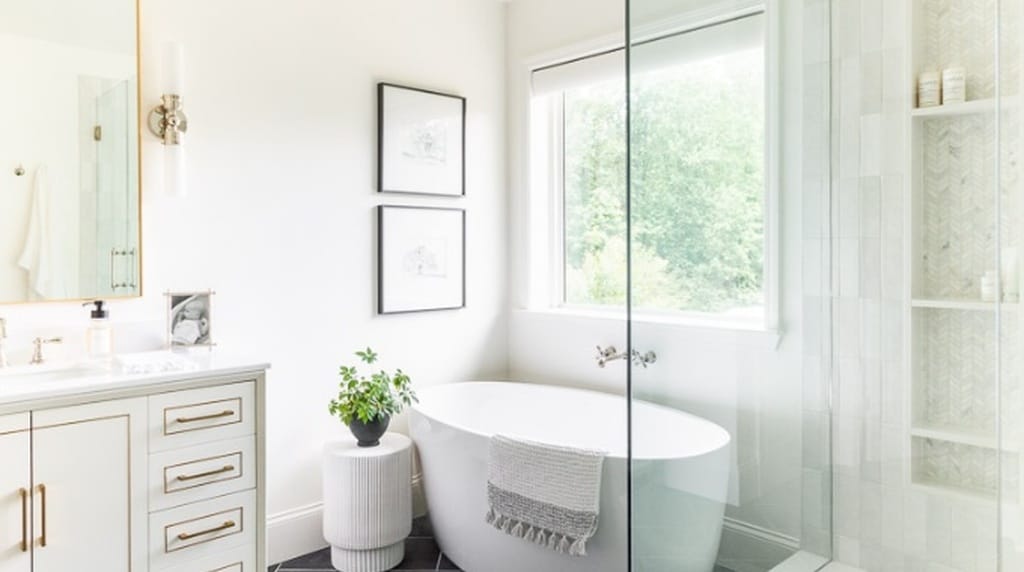
A tub-to-shower conversion is one of the most requested projects we do, and it is genuinely a great upgrade for a lot of households. But we are going to say something most contractors will not, because a bigger job usually means a bigger invoice: sometimes converting your tub to a shower is the wrong call, and you should keep the tub. This post is our honest breakdown of when a conversion makes sense and when it doesn’t, so you can make the decision based on your household, not on which answer sells more work.
Why Tub-to-Shower Conversions Are So Popular
The appeal is straightforward. Most adults use showers far more often than baths, sometimes exclusively, so a tub that sits unused for years is wasted square footage in a room where space is usually tight. Converting it to a walk-in shower opens the room up, modernizes the look instantly, and, when done as a curbless design, improves safety and accessibility for the long term. It is also one of the more dramatic transformations you can make in a bathroom relative to the footprint you are working with.
For a household where nobody bathes and the tub genuinely never gets used, this is close to an easy call. The only real question becomes design and budget, not whether to do it.
When You Should Seriously Consider Keeping the Tub
Here is where we push back on the assumption that everyone should convert. There are real situations where keeping at least one tub in the home is the smarter decision, and we tell clients this directly even when it means a smaller project.
If you have young children or are planning to, a tub is genuinely useful in a way a shower is not, bathing small kids safely and easily is much harder without one. Families in this stage of life are often better served keeping a tub in at least one bathroom, even if they convert a second bathroom to a walk-in shower.
Resale value is the other major factor, and it depends heavily on your specific home and market. In a house with multiple bathrooms, converting one to a shower while keeping a tub elsewhere is usually fine for resale. But if your home has only one bathroom, or only one with a tub, removing it entirely can meaningfully narrow your buyer pool when you eventually sell, particularly to families with young children. This is worth discussing honestly with a real estate professional who knows your specific market, not assuming either way.
There is also a simpler case: if you genuinely enjoy baths and use the tub regularly, none of the efficiency arguments matter. The best bathroom is the one that fits how you actually live, not the one that photographs best or matches a trend.
The Middle Path Many Homeowners Miss
You do not have to choose between all tub and all shower across your entire home. The most common solution we build for families weighing this decision is converting one bathroom, often a guest or secondary bath, to a walk-in shower, while keeping a tub in the primary or a shared family bathroom. This gets you the modern, opened-up shower experience where you will benefit most and preserves the practical and resale advantages of having a tub somewhere in the house.
If you are on the fence, walk through your bathrooms and think honestly about which tub, if any, actually gets used. That answer usually makes the decision for you.
What a Good Conversion Actually Involves
If you decide to convert, the quality of the execution matters as much as the decision itself. This is not simply pulling a tub and dropping in a shower pan. The plumbing typically needs adjustment, since tub and shower drains and valve heights differ. The space needs proper waterproofing and a correctly sloped pan, the exact hidden work that determines whether your new shower lasts, which we cover in detail in why so many bathrooms fail within two years.
You will also want to decide early whether you want a standard curbed entry or a curbless, zero-threshold design. Curbless is more technically demanding and costs more, but it is worth genuine consideration even if accessibility feels like a future concern rather than a current one. We make the case for building it proactively in the case for a curbless shower before you actually need one.
What It Costs, and Why We Won’t Guess a Number Here
Conversion cost depends on the scope of plumbing changes, whether you go curbless, the tile and glass you choose, and what we find once the old tub is removed, older bathrooms sometimes reveal water damage or plumbing issues behind the tub that need addressing. Rather than throw out a misleading range, we provide a detailed written estimate after seeing your specific bathroom, with itemized allowances so you know exactly what you are paying for. That is the same approach we take on every project, and we explain why in why we quote fixed written prices when most contractors won’t.
How We Actually Advise Clients
When someone asks us whether to convert their tub, we ask questions before we answer. Do you use the tub? Are kids in the picture now or in the next several years? How many other tubs are in the home? What does your neighborhood’s buyer pool typically look like? The honest answer is different for almost every household, and a contractor who gives you the same enthusiastic yes regardless of your situation is optimizing for the size of the job, not for what is right for you.
We would rather build you the bathroom that actually fits your life, even if that means a smaller project, than push the bigger one because it is more profitable. That approach has built long-term trust with the families we work with across Orland Park, Crestwood, and the rest of the Chicago area, and it is why so much of our work comes from referrals.
The Bottom Line
A tub-to-shower conversion is a fantastic upgrade for the right household and an unnecessary one for another. The right call depends on whether the tub actually gets used, whether young children are or will be in the picture, how many other tubs exist in the home, and what matters most to you day to day. We will tell you honestly which situation you are in, and we will build whichever bathroom actually fits how you live.
If you are weighing this decision, reach out through our contact page and we will walk your bathroom with you and talk through the real trade-offs before recommending anything. You can see finished conversions in our project gallery or learn more about our team at AMG Proline.
Written by the AMG Proline Team, licensed remodeling contractors serving Chicago and the surrounding suburbs since 2015.
Categories

Brewery Taproom Build-Out in Chicago: Floor Drains, Glycol Lines, Licensing Timeline and Budget
Quick answer: A brewery taproom build out in Chicago is driven by what happens under the floor and behind the bar: sloped floors and trench drains in the brewhouse, glycol-chilled draft lines from the cooler [...]

Med Spa Build-Out in Chicago: Treatment Room Layout, Electrical Loads and Real Construction Costs
Quick answer: Med spa build out cost in Chicago usually lands between about $80 and $250 per square foot for construction when you convert a space that was never medical, before equipment. A typical 1,200 [...]
Dental Office Build-Out Cost in Chicago: Plumbing, X-Ray Shielding, Equipment Rough-Ins and Timeline
Quick Answer A dental office build-out in Chicago typically costs $185 to $325 per square foot for construction, which works out to roughly $280,000 to $490,000 for a 1,500 square foot practice and $640,000 to [...]

Wet Room Bathroom Design in Chicago Homes: Layout, Waterproofing and Cost
Quick Answer A wet room bathroom in a Chicago home typically costs between $18,000 and $48,000 for a small to mid-size bathroom, and $45,000 to $75,000 or more for a primary bath. The price is [...]




