
Walk-In Shower vs. Bathtub: Which Is Better for Your Bathroom Remodel?
Choosing between a walk-in shower vs. bathtub can completely change how your bathroom looks, feels, and functions. A spacious walk-in shower can provide easier access, more room, and a clean modern design, while a bathtub offers something a shower cannot: the ability to soak, bathe young children, and maintain a traditional feature many homeowners still value.
There is no single winner for every bathroom.
The better choice depends on who uses the bathroom, how much space you have, your budget, accessibility needs, maintenance preferences, and whether another bathtub exists elsewhere in the home.
This guide compares walk-in showers and bathtubs across cost, resale value, accessibility, maintenance, space, daily use, and design so you can decide which makes more sense for your bathroom remodel.
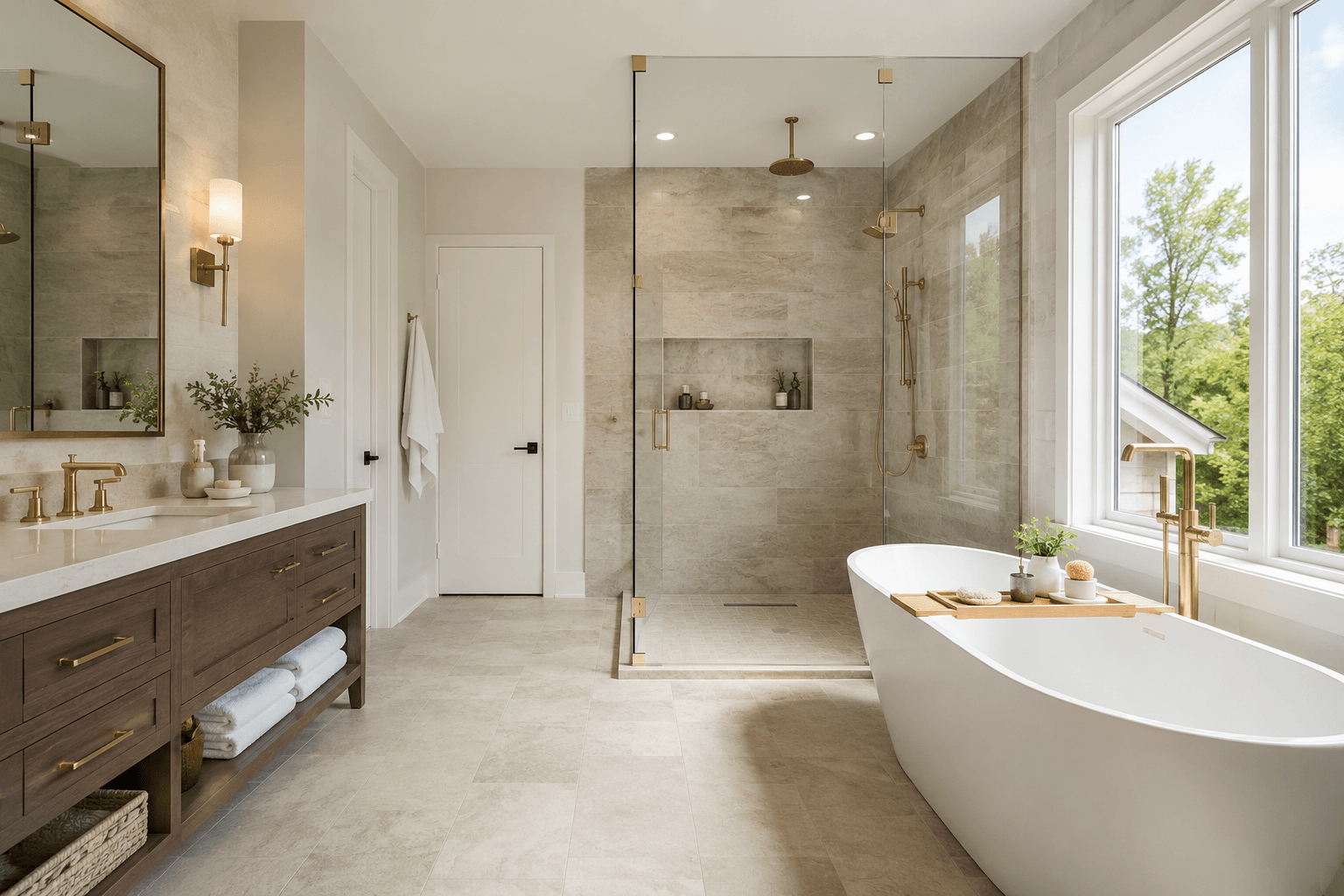
A bathroom with enough space can offer the best of both worlds: a separate walk-in shower for everyday use and a freestanding bathtub for soaking.
QUICK ANSWER: Choose a walk-in shower if easy access, everyday convenience, more shower space, and a modern design are your biggest priorities. Choose a bathtub if your household regularly takes baths, has young children, or you want to preserve at least one tub in the home. If space and budget allow, keeping one bathtub while adding a walk-in shower provides the most flexibility.
Walk-In Shower vs. Bathtub: Quick Comparison
| Feature | Walk-In Shower | Bathtub |
|---|---|---|
| Everyday showering | Excellent | Good with tub/shower combo |
| Accessibility | Excellent | More difficult to step into |
| Small bathrooms | Can make room feel more open | Uses a larger visual footprint |
| Bathing children | Less convenient | Excellent |
| Relaxation/soaking | Limited | Excellent |
| Customization | Very high | High |
| Cleaning | Usually easier with simple design | Easy surfaces but more bending/reaching |
| Aging in place | Strong option | Less convenient unless using a walk-in tub |
| Luxury design | Excellent | Excellent |
| Resale flexibility | Strong, especially if another tub remains | Useful for households that want a tub |
| Water use | Often lower for shorter showers | Full baths can use more water |
| Best solution | Daily convenience | Bathing and soaking |
What Is the Biggest Difference Between a Walk-In Shower and a Bathtub?
The biggest difference is how the space is used.
A bathtub creates a basin deep enough for soaking. It may be installed as a traditional alcove tub, freestanding tub, soaking tub, or tub-and-shower combination.
A walk-in shower dedicates that space entirely to showering.
Because a shower does not need the tall walls of a bathtub, it can offer a wider entrance and a more open feeling. Glass enclosures can also allow light and sightlines to continue through the room rather than visually dividing the bathroom.
For homeowners who shower every day but rarely take a bath, the shower may provide more practical value.
For households that regularly use the bathtub, removing it simply because showers are popular may be the wrong decision.
Walk-In Shower vs. Bathtub Cost in 2026
Cost depends heavily on what type of shower or bathtub you choose.
A standard acrylic bathtub replacement is very different from installing a large freestanding soaking tub. Likewise, a prefabricated shower costs substantially less than a custom tiled walk-in shower with frameless glass, niches, benches, and multiple fixtures.
Current 2026 cost guides show an extremely broad range for both options.
| Project | General Cost Considerations |
|---|---|
| Standard bathtub replacement | Usually one of the more affordable options if plumbing remains in place |
| Freestanding or premium bathtub | Higher material and installation costs |
| Tub-and-shower combination | Can offer both functions without requiring two separate spaces |
| Prefabricated walk-in shower | Generally less expensive than fully custom tile |
| Custom tiled walk-in shower | Higher cost due to waterproofing, tile, labor, glass and customization |
| Curbless walk-in shower | Can cost more because of drainage, floor slope and waterproofing requirements |
Chicago-area 2026 cost data also shows that custom walk-in showers can become substantial remodeling projects, particularly when high-end tile, glass, plumbing changes, or structural work are involved.
The important comparison is therefore not simply:
“Is a shower cheaper than a bathtub?”
It is:
“What type of shower or bathtub are you comparing, and how much construction does the bathroom require?”
What Makes a Walk-In Shower More Expensive?
Several elements can increase the cost of a walk-in shower.
Custom Tile
A tiled shower requires surface preparation, waterproofing, tile installation, grout, trim, and detailed finishing.
Premium materials such as natural stone, mosaics, specialty tile, or large-format slabs can raise the cost further.
Frameless Shower Glass
Large frameless panels create a clean, upscale appearance but generally cost more than a shower curtain or basic framed door.
Homeowners planning a custom enclosure can explore AMG Proline’s glass shower door options.
Plumbing Changes
Moving the drain, shower controls, supply lines, or showerheads increases the amount of plumbing work.
Curbless Construction
A truly curbless shower may require changes to the bathroom floor so water flows correctly toward the drain without a raised threshold.
Built-In Features
Custom additions such as niches, benches, grab bars, rainfall fixtures, handheld showerheads, and multiple shower controls can increase both material and labor costs.
Walk-In Shower Pros and Cons
Walk-in showers have become especially popular in primary bathrooms because they combine everyday function with a clean, open appearance.
Advantages of a Walk-In Shower
Easier entry. A low-threshold or curbless entrance eliminates the need to step over the side of a bathtub.
More shower space. Using the entire bathtub footprint for a shower can create significantly more room.
Modern appearance. Large-format tile, frameless glass, niches, benches, and contemporary fixtures can make the shower a major design feature.
Accessibility. Grab bars, seating, handheld fixtures, nonslip flooring, and wider entrances can all be incorporated into the design.
Customization. A custom shower can be built around the size and layout of the bathroom rather than relying on standard tub dimensions.
Better everyday function. For people who rarely take baths, dedicating the space to the feature they use every day often makes sense.
Considerations Before Choosing a Walk-In Shower
A custom walk-in shower can cost more than simply replacing an existing bathtub.
Glass requires regular cleaning, especially in areas with hard water.
Large tiled showers contain more grout and surface area unless low-maintenance materials are selected.
And most importantly, removing the only bathtub in the house deserves additional consideration.
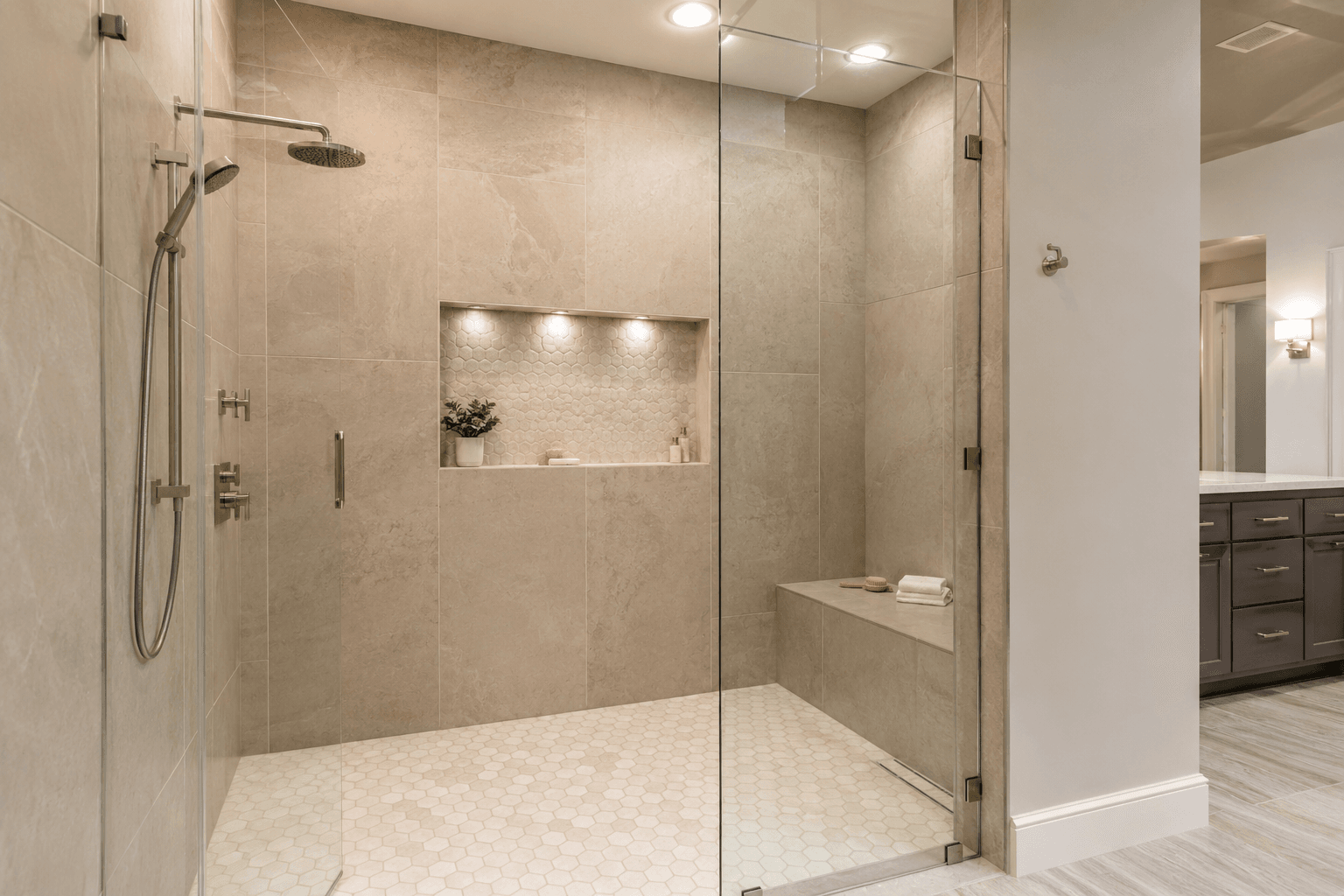
A custom walk-in shower can combine frameless glass, large-format tile, built-in storage, seating and multiple shower fixtures.
Bathtub Pros and Cons
Bathtubs remain useful even as large walk-in showers become more common.
Advantages of a Bathtub
Soaking. A bathtub provides a relaxing option that a traditional shower cannot duplicate.
Young children. Bathing babies and small children is generally easier in a traditional bathtub.
Pets. Some homeowners find a tub useful for washing pets.
Resale flexibility. Keeping at least one bathtub provides an option for future buyers who want one.
Design possibilities. Freestanding tubs can become a dramatic focal point in a larger primary bathroom.
Dual-purpose options. A tub-and-shower combination allows homeowners to retain both functions within one footprint.
Considerations Before Choosing a Bathtub
Stepping over a bathtub wall can become more difficult with age or limited mobility.
A bathtub can also occupy a large amount of floor space relative to how frequently it is actually used.
If everyone in the household takes showers and the bathtub sits unused most of the year, dedicating that space to a larger shower may provide greater everyday value.
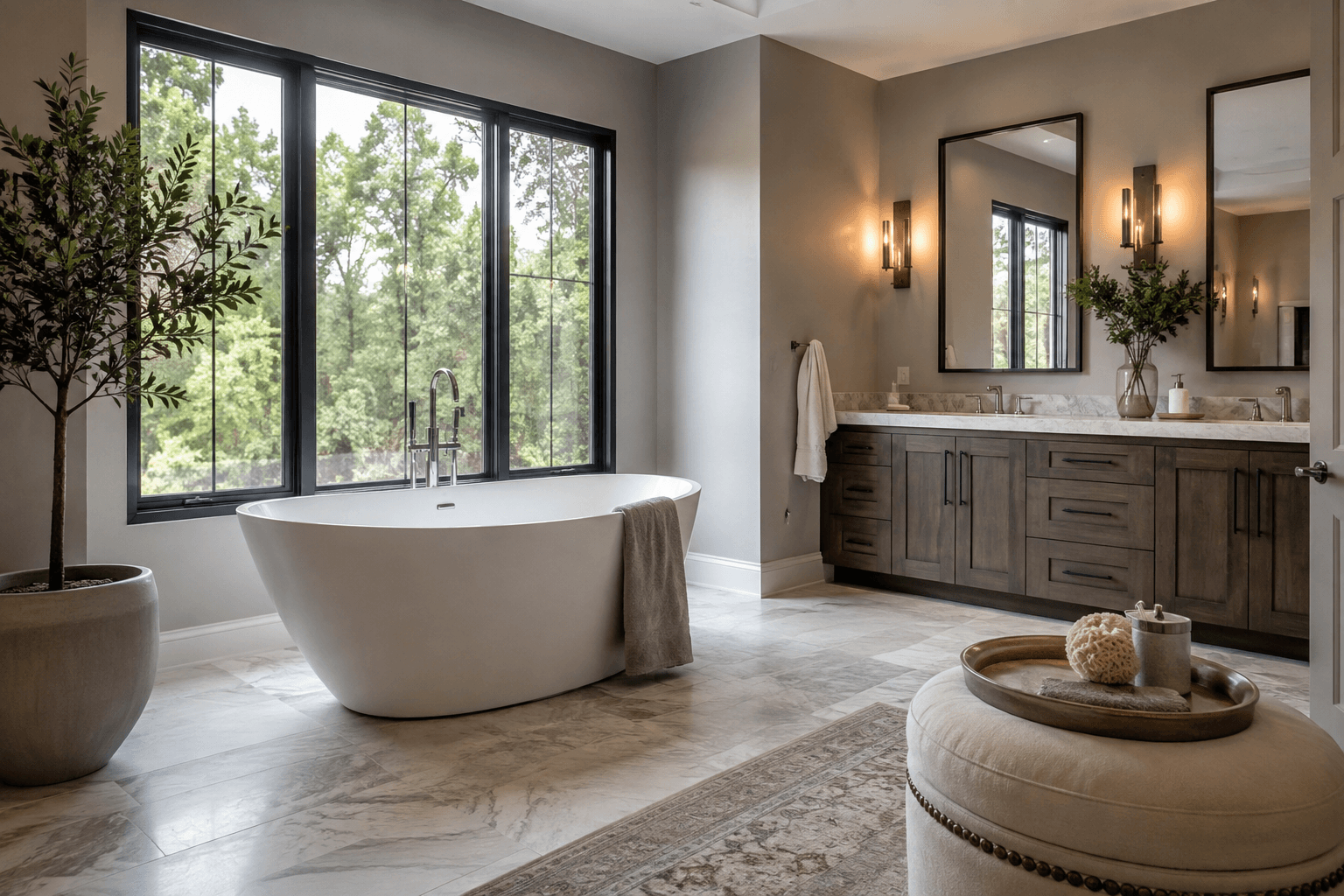
A freestanding tub can become a focal point in a larger bathroom while providing a dedicated space for soaking.
Walk-In Shower vs. Bathtub for Resale Value
There is no universal rule saying that one automatically adds more resale value than the other.
Buyer preferences vary.
A large, attractive walk-in shower can be a major selling feature, particularly in a primary bathroom. Recent real-estate and design coverage continues to highlight spa-like walk-in showers as desirable upgrades.
At the same time, some households strongly prefer having access to at least one bathtub, particularly families with younger children.
That leads to a practical remodeling strategy:
If your home has multiple bathrooms, consider keeping at least one bathtub while upgrading the primary or most-used bathroom with a walk-in shower.
This gives current homeowners the convenience of a larger shower while preserving a bathtub elsewhere in the home.
What If You Only Have One Bathroom?
Think more carefully before removing the home’s only tub.
Consider:
- Who currently lives in the home
- Whether anyone regularly takes baths
- Children or future children
- Accessibility needs
- How long you plan to remain in the house
- Your local housing market
- Whether the larger shower would significantly improve everyday use
Your bathroom should first work for the people who actually live in the home.
Walk-In Shower vs. Bathtub for a Small Bathroom
A walk-in shower can often make a smaller bathroom feel more open, especially when it uses clear glass.
A traditional tub creates a solid visual barrier around the lower portion of the room. A frameless shower can allow the eye to continue through the enclosure, making more of the floor and wall tile visible.
However, replacing a tub with an extremely small shower does not automatically improve the bathroom.
Good planning matters.
A bathroom designer should evaluate:
- Shower dimensions
- Door swing
- Toilet clearance
- Vanity placement
- Storage
- Drain location
- Glass placement
- Traffic flow
Sometimes the best solution is a walk-in shower.
Other times, keeping a compact bathtub or tub/shower combination makes better use of the existing layout.
Which Is Better for Accessibility?
For most people with mobility concerns, a walk-in shower has a significant advantage over a traditional bathtub.
A bathtub requires the user to step over a relatively high wall.
A low-threshold or curbless shower can substantially reduce that obstacle.
Accessibility upgrades can include:
| Feature | Benefit |
|---|---|
| Curbless entrance | Reduces or eliminates step-over height |
| Built-in bench | Provides seating |
| Grab bars | Adds stability |
| Handheld showerhead | Improves flexibility |
| Nonslip flooring | Improves traction |
| Wider entrance | Provides easier access |
| Easy-reach controls | Reduces unnecessary movement |
| Better lighting | Improves visibility |
Accessibility does not mean the bathroom needs to look institutional.
Grab bars, handheld fixtures, seating, and other features are available in contemporary finishes and can blend naturally into a high-end bathroom design.
Which Is Easier to Clean?
The answer depends on the design.
Walk-In Shower Cleaning
A simple shower with large-format tile and minimal grout can be relatively easy to maintain.
However, frameless glass can show:
- Water spots
- Soap residue
- Mineral buildup
A heavily tiled shower with many grout joints also requires more maintenance than large panels or large-format tile.
Bathtub Cleaning
A standard bathtub has a relatively smooth interior surface, but cleaning it often requires leaning or reaching over the side.
Tub-and-shower combinations may also have curtains, doors, tile, or wall panels that require maintenance.
Lowest-Maintenance Approach
For either option, maintenance can be reduced by choosing:
- Larger tiles
- Fewer grout joints
- Easy-clean surfaces
- Quality ventilation
- Properly installed glass
- Simple fixture layouts
The design itself matters more than whether the bathroom contains a tub or shower.
Which Uses Less Water?
The answer depends on how long you shower and how full you fill the bathtub.
A short shower with a water-efficient showerhead can use less water than filling a bathtub.
A long shower, especially one using multiple showerheads or high-flow fixtures, can use a significant amount of water.
So if water efficiency is important, focus on both the bathroom layout and the fixtures you select.
Walk-In Shower vs. Bathtub for Families
For households with babies or young children, a bathtub remains extremely practical.
It provides a contained space for bathing that a large open shower does not naturally offer.
That does not mean every bathroom needs a bathtub.
A home with multiple bathrooms can often use:
Primary Bathroom: large walk-in shower
Children’s / Hall Bathroom: traditional bathtub or tub-and-shower combination
This arrangement provides both convenience and flexibility.
Walk-In Shower vs. Bathtub for Aging in Place
For homeowners planning to remain in their home long-term, accessibility deserves more attention.
A curbless or low-threshold shower can be easier to enter and can accommodate:
- Grab bars
- Seating
- Handheld showerheads
- Nonslip flooring
- Wider entrances
A traditional bathtub may become more difficult to use over time because of the step-over height.
If accessibility is one of the main reasons you’re considering removing a tub, read our Tub-to-Shower Conversion: Cost, Benefits & What to Expect guide.
What About a Tub-and-Shower Combination?
A tub/shower combination is still a practical choice, particularly when space is limited and you want to preserve both bathing options.
A Tub/Shower Combo Makes Sense When:
- The bathroom is small
- It is the only bathroom in the house
- Young children use the room
- You want to retain a bathtub
- There isn’t enough room for separate fixtures
The tradeoff is that you still need to step over the bathtub wall to use the shower.
For accessibility, a dedicated walk-in shower usually performs better.
Can You Have Both a Walk-In Shower and a Bathtub?
Absolutely.
If the bathroom is large enough, installing a separate shower and bathtub can provide the greatest flexibility.
This is especially common in larger primary bathroom remodels.
The tub can function as the relaxing, occasional-use feature while the walk-in shower handles everyday use.
A successful layout needs enough space around both fixtures so the bathroom does not feel crowded.
That means considering:
- Shower dimensions
- Tub dimensions
- Vanity placement
- Walkways
- Door swings
- Windows
- Plumbing locations
- Storage
The first image in this guide shows exactly why this layout can work so well when the room is large enough.
Walk-In Shower vs. Bathtub: Which Looks More Luxurious?
Either can look luxurious when designed well.
A high-end walk-in shower may include:
- Frameless glass
- Large-format porcelain
- Natural stone
- Rain showerheads
- Handheld fixtures
- Built-in benches
- Niches
- Linear drains
- Custom lighting
A luxury bathtub may feature:
- Freestanding design
- Floor-mounted filler
- Sculptural shape
- Natural stone surround
- Feature lighting
- Large windows
- Heated flooring
Instead of asking which fixture is automatically more luxurious, consider which design fits the room and how the bathroom will actually be used.
Decision Guide: Should You Choose a Walk-In Shower or Bathtub?
| Choose a Walk-In Shower If… | Choose a Bathtub If… |
|---|---|
| You almost always shower | You regularly take baths |
| Accessibility is important | You have small children |
| You want easier entry | The home currently has no other tub |
| You want a larger shower | Soaking is a priority |
| You want an open modern look | You prefer a traditional bathroom |
| The current bathtub rarely gets used | The bathtub is frequently used |
| You’re planning for aging in place | You want maximum bathing flexibility |
Choose Both If…
You have enough room and budget to comfortably fit a separate shower and bathtub without sacrificing circulation, storage, vanity space, or other bathroom priorities.
Should You Convert Your Tub Into a Walk-In Shower?
If your existing bathtub is rarely used, converting it into a larger walk-in shower can dramatically change how the bathroom functions.
Instead of fitting a shower inside the confines of a tub, the entire area can become a dedicated shower with:
- More standing room
- Easier entry
- Custom storage
- Better fixtures
- Frameless glass
- Seating
- Accessibility features
AMG Proline handles professional walk-in shower installation as well as complete tub-to-shower conversions.
Walk-In Showers & Bathroom Remodeling in Chicago
The right choice between a bathtub and walk-in shower depends on the home, bathroom layout, household, and long-term goals.
AMG Proline remodels bathrooms throughout Chicago and the surrounding suburbs, including complete renovations, custom showers, tile, vanities, fixtures, flooring, shower glass, and accessibility upgrades.
Learn more about bathroom remodeling in Chicago, bathroom remodeling in Crestwood, and bathroom remodeling in Burr Ridge.
You can also view completed work in the AMG Proline project gallery.
Not Sure Which Option Works for Your Bathroom?
You do not have to decide before understanding what your existing space can accommodate.
AMG Proline can evaluate your bathroom, discuss shower and bathtub options, review materials and layouts, and provide a quote based on the actual project.
Request a Free Bathroom Remodeling Quote or call (708) 979-3298.
Frequently Asked Questions About Walk-In Showers vs. Bathtubs
Is a walk-in shower better than a bathtub?
Neither is automatically better. A walk-in shower is generally better for easy entry, daily showering, accessibility, and an open design. A bathtub is better for soaking, bathing young children, and households that regularly use a tub.
Is a walk-in shower more expensive than a bathtub?
It can be. A custom tiled walk-in shower with frameless glass, waterproofing, niches, benches, and premium fixtures can cost substantially more than replacing a standard bathtub. However, premium freestanding tubs and major plumbing changes can also make bathtub installations expensive.
Does replacing a bathtub with a walk-in shower hurt resale value?
Not necessarily. Walk-in showers are desirable to many buyers, particularly in primary bathrooms. However, some buyers still value having at least one bathtub. If another tub remains elsewhere in the house, converting one bathroom to a walk-in shower generally preserves more flexibility.
Should I keep at least one bathtub in my house?
If practical, keeping at least one bathtub can be useful for young children, pets, soaking, and future buyer preferences. This is especially worth considering before removing the only bathtub in the home.
Is a walk-in shower better for seniors?
A low-threshold or curbless walk-in shower is generally easier to enter than a traditional bathtub. It can also incorporate grab bars, seating, handheld fixtures, nonslip flooring, and wider entrances.
Does a walk-in shower make a small bathroom look bigger?
It can. Clear frameless glass allows more of the bathroom floor and walls to remain visible, which can make the room feel more open. The actual result depends on layout, shower dimensions, lighting, and material choices.
Which is easier to clean: a shower or bathtub?
It depends on the materials and design. A simple shower with large-format tile can be relatively easy to clean, while a heavily tiled shower with lots of grout may require more maintenance. Bathtubs have smooth surfaces but can require bending and reaching during cleaning.
Is a freestanding tub better than a built-in bathtub?
Neither is inherently better. Freestanding tubs can create a dramatic design feature, while alcove or built-in tubs often use space more efficiently. The best choice depends on room size, plumbing, budget, and design goals.
Can I have a bathtub and walk-in shower in the same bathroom?
Yes. Larger primary bathrooms can often accommodate both. The layout should preserve comfortable walkways, storage, vanity space, and enough room around each fixture.
How do I know if my bathroom has enough room for both?
A contractor or bathroom designer can measure the room and evaluate fixture clearances, plumbing locations, door swings, windows, vanity placement, and circulation before recommending a layout.
Ready to Remodel Your Bathroom?
Whether your bathroom needs a spacious walk-in shower, a new bathtub, or both, AMG Proline can help you design the space around how you actually use it.
From demolition and waterproofing to tile, plumbing coordination, shower glass, vanities, fixtures, and final finishes, our remodeling team handles the project from start to finish.
Get Your Free Bathroom Remodeling Quote or call (708) 979-3298 to get started.
Categories

Brewery Taproom Build-Out in Chicago: Floor Drains, Glycol Lines, Licensing Timeline and Budget
Quick answer: A brewery taproom build out in Chicago is driven by what happens under the floor and behind the bar: sloped floors and trench drains in the brewhouse, glycol-chilled draft lines from the cooler [...]

Med Spa Build-Out in Chicago: Treatment Room Layout, Electrical Loads and Real Construction Costs
Quick answer: Med spa build out cost in Chicago usually lands between about $80 and $250 per square foot for construction when you convert a space that was never medical, before equipment. A typical 1,200 [...]

Dental Office Build-Out Cost in Chicago: Plumbing, X-Ray Shielding, Equipment Rough-Ins and Timeline
Quick Answer A dental office build-out in Chicago typically costs $185 to $325 per square foot for construction, which works out to roughly $280,000 to $490,000 for a 1,500 square foot practice and $640,000 to [...]

Wet Room Bathroom Design in Chicago Homes: Layout, Waterproofing and Cost
Quick Answer A wet room bathroom in a Chicago home typically costs between $18,000 and $48,000 for a small to mid-size bathroom, and $45,000 to $75,000 or more for a primary bath. The price is [...]




